🤓 Code Archaeologists
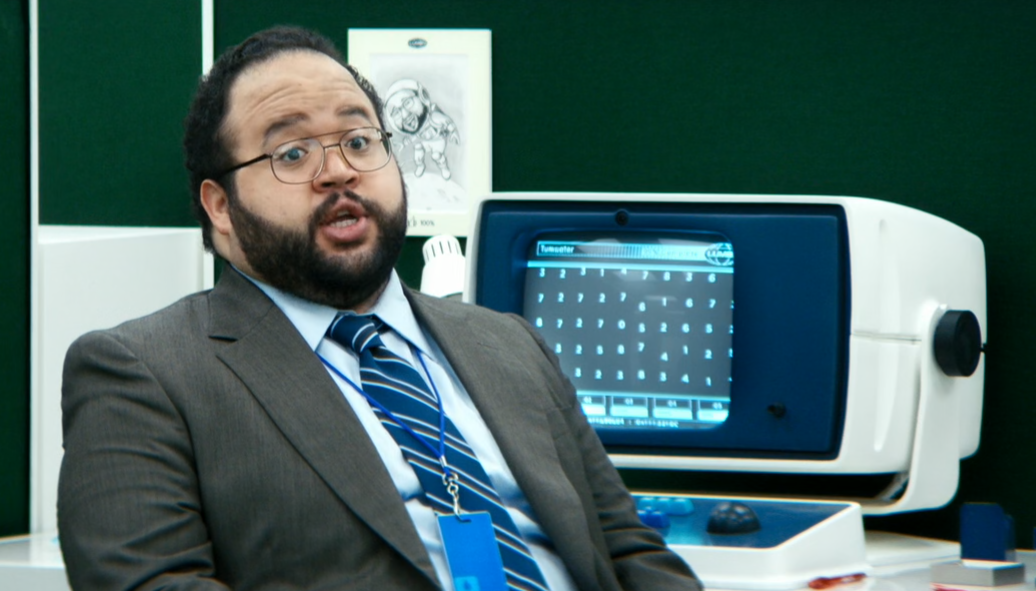
There’s something the Macrodata Refinement team does in Severance that keeps coming back to me. They sit at terminals all day, scanning screens of numbers for patterns.
They don’t know what the numbers represent. They don’t know why certain clusters feel “scary” and need to be binned. They just search, guided by instinct and feedback, through data whose meaning exists somewhere above their clearance level.
That’s starting to feel familiar.
The Cost Inversion
The cost of generating software is dropping toward zero. You describe what you want, AI produces code. The marginal cost of another implementation, another approach, another refactor—essentially nothing.
But the cost of directing that generation toward a real goal? That’s still expensive. Making software production-ready, stable, workable for actual users—that requires someone with intent. A human who knows what problem they’re solving and why.
Generation is cheap. Direction is not.
The Directed Subspace
The space of possible programs is infinite. Most of that space is garbage—programs that don’t compile, don’t run, don’t do anything useful.
There’s that thought experiment about monkeys on typewriters—given infinite time, one will produce Shakespeare. AI isn’t that. It’s not random search through all possible character sequences.
But it’s also not writing in the traditional sense. It’s more like directed excavation. AI constrains the search space dramatically—it knows what valid code looks like, what patterns solve common problems, what structures tend to work. You’re not searching through infinity. You’re searching through a much smaller subspace of plausible programs.
Still, you’re searching. You describe what you want, the AI narrows the field, and you sift through what emerges. The generation is directed, but it’s still generation from a space of possibilities rather than creation from pure intent.
From Writers to Archaeologists
Engineers used to write code. We’d think, design, type, compile, debug. The code came from us—our knowledge, our decisions, our keystrokes.
Now it feels more like archaeology.
The code is already out there, somewhere in the possibility space. Our job is to find it. We describe what we’re looking for, the AI digs in a directed way, and we sift through what it surfaces. Is this the artifact we need? Does it fit? Does it work with what we already have?
We’re not creating from nothing. We’re excavating from a constrained everything.
The MDR Parallel
Software engineers aren’t the severed employees of Lumon. We still understand the problems we’re solving. We still have the intent that guides the search. We know why we’re looking for certain patterns.
But the act of coding itself is starting to feel like Macrodata Refinement. You’re not writing—you’re refining. Scanning generated output for the solution that fits. Pattern-matching on what the AI surfaces. Finding the code that was always there, somewhere in the possibility space, waiting to be discovered.
The MDR team bins scary numbers without knowing what makes them scary. We accept or reject generated code based on whether it “feels right”—whether it matches the shape of the solution we’re looking for, even when we couldn’t have written it ourselves.
What Changes?
Does the shift from writer to archaeologist change what it means to be an engineer?
Maybe not fundamentally. Engineering was always about finding solutions in a space of possibilities. We just used to traverse that space manually, one keystroke at a time. Now we traverse it through description and iteration, letting AI do the low-level navigation while we handle the high-level direction.
The skill shifts from “can you write this code?” to “can you recognize the right code when you see it?” From generation to verification. From typing to directing.
But that directing—knowing what problem you’re actually solving, what constraints matter, what trade-offs are acceptable—that’s still expensive. That’s still human. That’s still the job.
The Macrodata Refinement team doesn’t know what they’re refining or why. We do. That’s the difference that matters.
At least for now.
There's something the Macrodata Refinement team does in Severance that keeps coming back to me. They sit at terminals all day, scanning screens of numbers for patterns.
They don't know what the numbers represent. They don't know why certain clusters feel "scary" and need to be binned. They just search, guided by instinct and feedback, through data whose meaning exists somewhere above their clearance level.
That's starting to feel familiar.

## The Cost Inversion
The cost of generating software is dropping toward zero. You describe what you want, AI produces code. The marginal cost of another implementation, another approach, another refactor—essentially nothing.
But the cost of directing that generation toward a real goal? That's still expensive. Making software production-ready, stable, workable for actual users—that requires someone with intent. A human who knows what problem they're solving and why.
Generation is cheap. Direction is not.
## The Directed Subspace
The space of possible programs is infinite. Most of that space is garbage—programs that don't compile, don't run, don't do anything useful.
There's that thought experiment about monkeys on typewriters—given infinite time, one will produce Shakespeare. AI isn't that. It's not random search through all possible character sequences.
But it's also not writing in the traditional sense. It's more like directed excavation. AI constrains the search space dramatically—it knows what valid code looks like, what patterns solve common problems, what structures tend to work. You're not searching through infinity. You're searching through a much smaller subspace of plausible programs.
Still, you're searching. You describe what you want, the AI narrows the field, and you sift through what emerges. The generation is directed, but it's still generation from a space of possibilities rather than creation from pure intent.
## From Writers to Archaeologists
Engineers used to write code. We'd think, design, type, compile, debug. The code came from us—our knowledge, our decisions, our keystrokes.
Now it feels more like archaeology.
The code is already out there, somewhere in the possibility space. Our job is to find it. We describe what we're looking for, the AI digs in a directed way, and we sift through what it surfaces. Is this the artifact we need? Does it fit? Does it work with what we already have?
We're not creating from nothing. We're excavating from a constrained everything.
## The MDR Parallel
Software engineers aren't the severed employees of Lumon. We still understand the problems we're solving. We still have the intent that guides the search. We know why we're looking for certain patterns.
But the act of coding itself is starting to feel like Macrodata Refinement. You're not writing—you're refining. Scanning generated output for the solution that fits. Pattern-matching on what the AI surfaces. Finding the code that was always there, somewhere in the possibility space, waiting to be discovered.
The MDR team bins scary numbers without knowing what makes them scary. We accept or reject generated code based on whether it "feels right"—whether it matches the shape of the solution we're looking for, even when we couldn't have written it ourselves.
## What Changes?
Does the shift from writer to archaeologist change what it means to be an engineer?
Maybe not fundamentally. Engineering was always about finding solutions in a space of possibilities. We just used to traverse that space manually, one keystroke at a time. Now we traverse it through description and iteration, letting AI do the low-level navigation while we handle the high-level direction.
The skill shifts from "can you write this code?" to "can you recognize the right code when you see it?" From generation to [verification](/verification-is-the-bottleneck.md). From typing to directing.
But that directing—knowing what problem you're actually solving, what constraints matter, what trade-offs are acceptable—that's still expensive. That's still human. That's still the job.
The Macrodata Refinement team doesn't know what they're refining or why. We do. That's the difference that matters.
At least for now.